
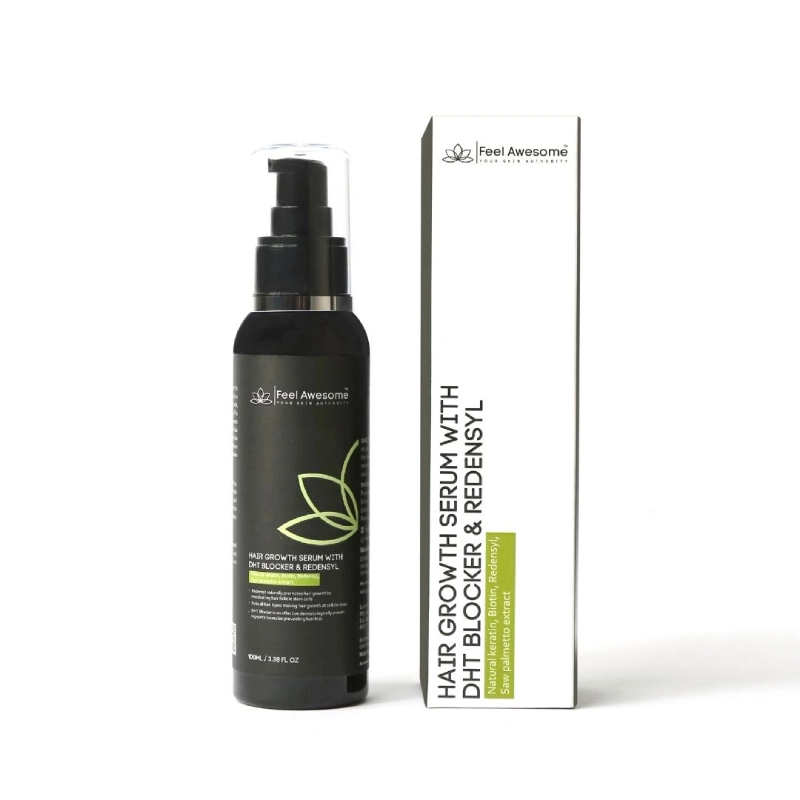



Hair fall can be frustrating, especially when you don’t know what’s causing it. One of the most common reasons behind thinning hair is the hormone DHT, which can weaken hair follicles over time. This is where DHT blocker serums come in. They are designed to reduce the effects of DHT on the scalp, helping protect the follicles and support healthier hair growth.
In this guide, you’ll learn what DHT really is, how DHT blocker serums work, the myths people often believe, and what science actually says about their results. By the end, you’ll know whether a DHT blocker serum is truly right for you.
Why hair loss is a top concern for many people.
Rise of hair serums claiming to block DHT, why they’re popular.
- What readers will learn: how DHT Blocker Serum affects hair
- what serums can realistically do
- where science stands, and how to set expectations right.
What Is DHT — And Why Does It Matter for Hair Loss?
Dihydrotestosterone (DHT) is a powerful androgen hormone that comes from testosterone. It plays a normal role in the body, but it becomes a problem when it affects certain hair follicles on the scalp.
How DHT affects hair follicles:
DHT can attach to androgen receptors in the hair follicles. When this happens, the follicles begin to shrink, a process called miniaturization. Over time, this leads to thinner hair, shorter growth cycles, and eventually weaker or barely visible strands.
Genetics and personal sensitivity:
Not everyone is equally affected by DHT. Some people have follicles that are genetically more sensitive to it. This sensitivity increases the chances of pattern hair loss (androgenetic alopecia). In these individuals, even normal levels of DHT can trigger continuous thinning and recession.
What Are “DHT Blocker” Products: Pills, Serums & Topicals
DHT blockers usually refer to ingredients or medications that reduce the effects of DHT, a hormone linked to hair thinning. The most common medical DHT blockers are 5-alpha-reductase inhibitors like finasteride and dutasteride, which work by blocking the enzyme that converts testosterone into DHT.
Oral vs. topical versions:
- Oral DHT blockers affect the entire body and are clinically proven but may come with systemic side effects.
- Topical DHT blockers or serums are designed to work only on the scalp, aiming to lower DHT levels locally while reducing the risk of full-body effects.
Natural or cosmetic serums vs. medicated ones:
Many over-the-counter serums claim to block DHT using herbs, plant extracts, or nutrients. These formulas are generally weaker and have less scientific proof compared to medically approved treatments.
What Science Actually Says — Evidence for and Against DHT Blocker Serums
What evidence supports DHT blocker/topical treatments
- Studies with topical finasteride suggest it can improve hair density and reduce hair loss while having fewer systemic side-effects compared to oral finasteride.
- In animal studies, blocking DHT or androgen-receptor activity slowed DHT-induced inhibition of hair regrowth — shows that androgen suppression can reverse some DHT effects.
- A clinical study of a hair-growth lotion/serum (not necessarily a strong pharmaceutical DHT blocker) reported improved hair density, growth rate, and reduced hair thinning over 90 days of use.
What evidence is weak or lacking
- Many over-the-counter DHT-blocker serums, especially natural or herbal ones, do not have strong clinical studies to support their claims. Their effectiveness is often based on personal experiences or marketing rather than solid scientific evidence.
- While topical DHT blockers do show promise, their long-term safety and proven results are still limited when compared to well-researched oral medications.
- It’s also important to remember that hair loss is influenced by many factors including hormones, genetics, stress, nutrition, and overall health. Blocking DHT helps only when DHT is the main cause. In many cases, serums alone may not solve the entire problem and may need to be part of a broader treatment plan.
Common Myths vs. Reality: What DHT Blocker Serums Can and Cannot Do
| Myth / Claim | What Science Says / Reality |
|---|---|
| “Apply any DHT-blocker serum → hair regrowth for bald patches” | Effective serums (with proven active agents) can help maintain existing hair or slow thinning, but regrowing long-lost follicles is unlikely. |
| “Natural/herbal serums are just as good as medications” | Herbal/natural products are generally weaker, poorly studied; scientific support is limited. |
| “Once I start, I’ll never lose hair again” | Benefits depend on continued use; stopping treatment often leads to resumed hair thinning. |
| “Serums have zero side-effects because they are topical” | Topical DHT-blockers likely have fewer systemic effects than oral pills, but data is limited and proper formulations/quality matter. |
Who Might Benefit from a DHT Blocker Serum?
- People experiencing early-stage hair thinning or pattern hair loss, when follicles are still active.
- Those who want to avoid the systemic side effects of oral DHT blockers but still prefer a topical option.
- Individuals who have realistic expectations and understand that serums help manage hair loss, not guarantee full regrowth.
- People looking for a gentler, supportive treatment to maintain scalp health and slow down further thinning.
Who Should Be Cautious?
- Anyone with underlying medical or hormonal issues causing hair loss.
- People experiencing sudden, severe, or patchy hair loss, as this may signal a deeper health problem.
- Individuals with scalp infections, irritation, or allergies to ingredients in DHT blocker serums.
- Anyone unsure about their hair-loss cause should consult a dermatologist or trichologist before starting treatment.
Practical Tips: How to Use (or choose) a DHT Blocker Serum Wisely
- Check if the product has a scientifically validated active ingredient, not just vague herbal claims. Click Here
- Use consistently and over months — don’t expect overnight results.
- Combine with healthy hair-care habits: balanced diet, scalp hygiene, reducing stress, avoiding damaging treatments.
- Keep realistic expectations: quality thinned hair and slower hair loss is more realistic than full restoration.
- Monitor results and consult a professional if needed.
Conclusion
DHT blocker serums, when made with well-researched and proven active ingredients, can be a helpful way to slow down hair thinning and support overall scalp health. They work by reducing the impact of DHT on the hair follicles, which may help preserve existing hair and improve thickness over time. However, these serums are not magic solutions. Science supports their role as part of a hair-loss management routine, not as guaranteed cures for baldness.
Many natural or herbal DHT-blocker serums do not have enough clinical evidence behind them, so the results can be inconsistent. For people dealing with noticeable hair loss or pattern baldness, starting treatment early is important. Combining DHT blockers with clinically proven options and consulting a healthcare professional usually leads to the most realistic and effective results. This balanced approach helps set the right expectations and improves long-term hair health.
Leave a Reply